

Nuclear is a costly choice
- Power at more than 3 times the cost of wind and solar
- Renewable energy is booming around the world and is driving huge job growth while reliably delivering low-cost power
- Solar and wind energy can create jobs today because their technologies are off the shelf and ready to go
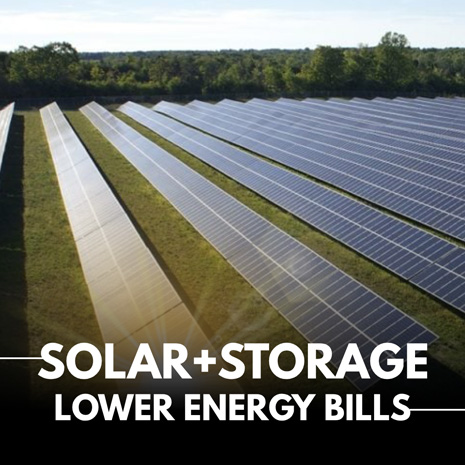
- Solar and wind easily combine with all sorts of storage – batteries, compressed air, hydro reservoirs, thermal storage
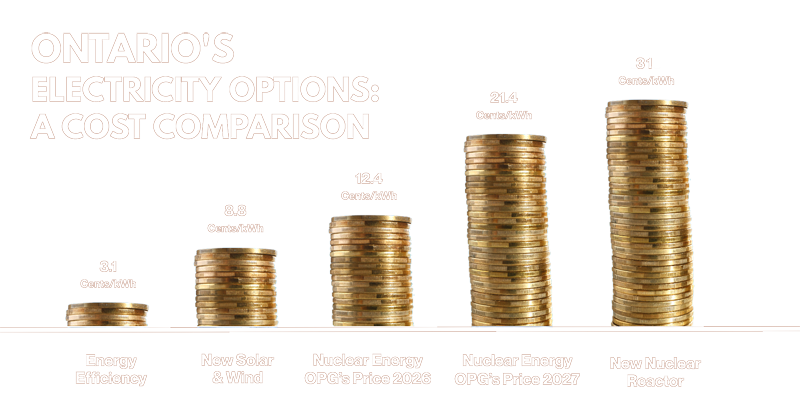
Renewable energy can get the job done faster
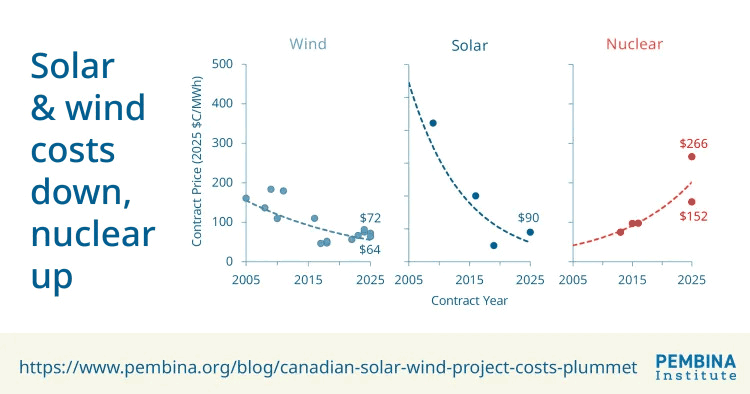
Around the world today, new renewable power installations add as much power every two days as nuclear adds in a year. In 2024, China – one of the few places actively building new nuclear – added more than 200 times more renewable energy output than nuclear to its power system.
This chart explains why.
Solar and wind are projected to fall by another 20-50% in cost in the next ten years. Nuclear simply can’t compete with a dynamic mix of renewables plus storage on cost, reliability or speed. Ontario is going to be left with expensive power if it pursues gigantic nuclear projects while our neighbours and competitors go all in on low-cost renewable energy.
Late last year, the United Nations declared that renewable energy has hit a tipping point and is now rapidly overtaking all other energy sources on cost. According to the UN, solar power now is 41% cheaper and wind power is 53% cheaper than the lowest-cost fossil fuel. Over 90% of all electricity generating capacity added worldwide was renewable in 2024.
Renewable energy projects take anywhere from a few months to a couple of years to construct. By contrast, every nuclear in Ontario’s history has been late and over budget, including the Darlington refurbishment project. New nuclear will take 10-20 years to plan and build – decades in which already lower cost renewable energy and storage costs will continue to fall.
Solar shines
Solar has become the lowest cost way to supply energy pretty much anywhere. Today’s panels are far more efficient than panels from the days of Ontario’s first forays into solar (and promising new technology could dramatically increase this even further in the near future) and costs have dropped rapidly over the last decade thanks to the massive increases in manufacturing capacity. Unlike nuclear components, solar panels really can be produced by the millions.
As the Ember Energy Institute notes, the “latest numbers on solar deployment in 2025 defy gravity, with annual solar installations continuing their sharp rise. In a world of volatile energy markets, solar offers domestically produced power that can be rolled out at record speed to meet growing demand . . .”
With battery prices falling steeply, the combination of solar and storage is now unstoppable. Of course, solar can also be paired with wind, backed up by water power or combined with other storage methods, like compressed air or heat storage to provide steady reliable power around the clock.
Solar on rooftops, parking lots or even corn fields used to grow inputs for ethanol production (a sunset industry as EV adoption accelerates) can be used to produce low cost zero emissions power without requiring new land use.
Solar, of course, also peaks on hot summer days when Ontario’s electricity demand hits its highest point thanks to air conditioning use. Instead of running expensive and polluting gas plants on days when air quality is often poor, we can use clean solar instead.
Offshore Wind – massive untapped power
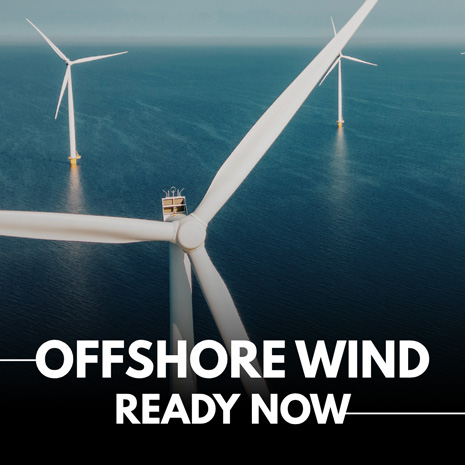
Winds that blow across water are stronger and more consistent than winds that blow across land. That’s why many countries are rapidly expanding offshore wind. Ten European countries are joining forces to create a massive offshore wind farm in the North Sea.
Meanwhile, Ontario has access to four of the five Great Lakes, some of the largest inland water bodies on the planet. The Canadian side of Lake Ontario alone is 10,000 km2. Great Lakes wind farms with a lake bed footprint of less than one square kilometre could supply all of Ontario’s electricity needs. Connections to offshore wind farms could be built at Wesleyville, Nanticoke, and St. Clair Township where OPG has disused power sites.
Offshore wind is a huge opportunity for Ontario to kickstart a new industry while our American neighbours turn their back on this massive opportunity. It could create demand for Ontario-made steel, electrical components and for batteries, all while supplying low-cost power. Ontario shipyards could help build platforms and support vessels used to install them.
Wind also pairs well with solar with wind strongest over the winter months when solar is more limited.
Jobs now, not decades from now
Northumberland needs jobs, but this nuclear project is not the answer. Planning such a massive nuclear station would take years and it will not be financially feasible given its enormous upfront costs and many lower cost alternatives.
By comparison, solar, wind and storage are ready to go with easy to access components and plenty of land in Wesleyville. We could start building a massive solar farm with storage on the proposed site today and have power flowing within two years. Offshore wind is another huge opportunity and could connect to transmission infrastructure already in place at the site.
Solar, wind and storage will deliver competitively priced power that will support job growth. Nuclear will deliver costly power that will deter new industries, data centres and other uses. With current economic conditions, asking companies to pay double the price or more for power isn’t a recipe for success.